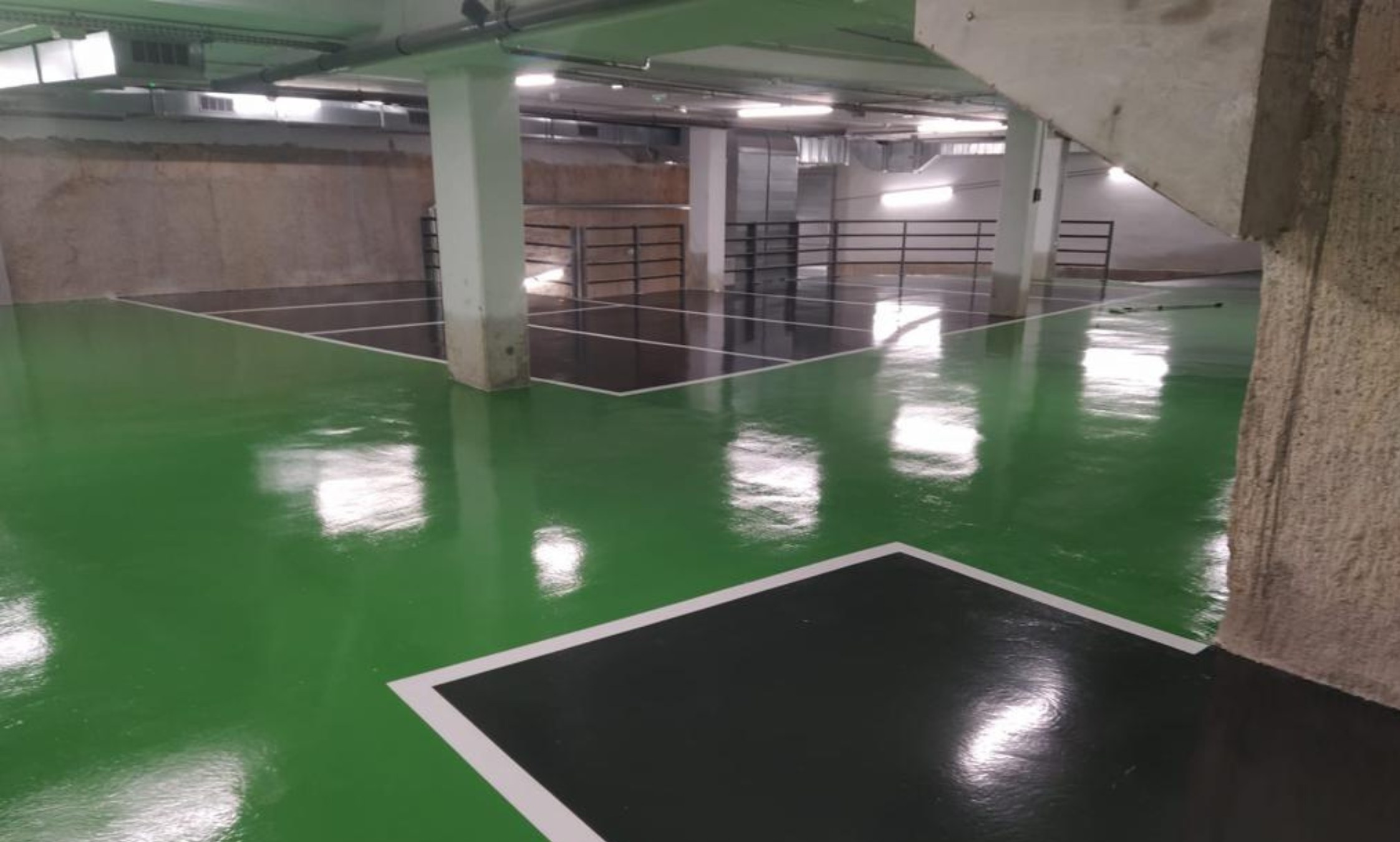
Every day a car park floor takes cars driving and turning on it, dripping oil and fuel, water and mud carried in on the tyres and, on the ramps, braking. Over the years the concrete wears, gives off dust, gets stained and the markings fade away.
At Catalana de Rehabilitació we renew the floors of car parks and garages for owners’ associations (comunidades de propietarios), public and private car parks, businesses and homes: we prepare the substrate, apply the right system for each area and leave bays, aisles and ramps clearly marked.
Common problems with car park floors
- Worn concrete that gives off dust and dirties cars and common areas.
- Oil and fuel stains that the concrete soaks up and that will not come out.
- Cracks, potholes and broken joints.
- Ramps that are slippery when wet.
- Bays, arrows and pedestrian crossings that can no longer be seen.
- Damp and water ingress, especially if the top level is open to the sky.
Which system for each area
| Area | System | Why |
|---|---|---|
| Bays and aisles | Multi-layer epoxy resin or epoxy paint, depending on traffic | A seamless surface that does not give off dust, resists oil and fuel and is easy to clean |
| Ramps and entrances | Anti-slip finish with aggregate | Grip for tyres and pedestrians, even when the floor is wet |
| Open top level | Waterproofing suitable for vehicle traffic | Stops water getting through to the levels below |
| New or very large car parks | Polished concrete | Very hard-wearing and economical when the floor is built from scratch |
If the car park has little traffic and the substrate is in good condition, a properly applied epoxy paint may be enough; in busy car parks, multi-layer resin lasts considerably longer. We recommend what makes sense in your case.
Markings and finishes
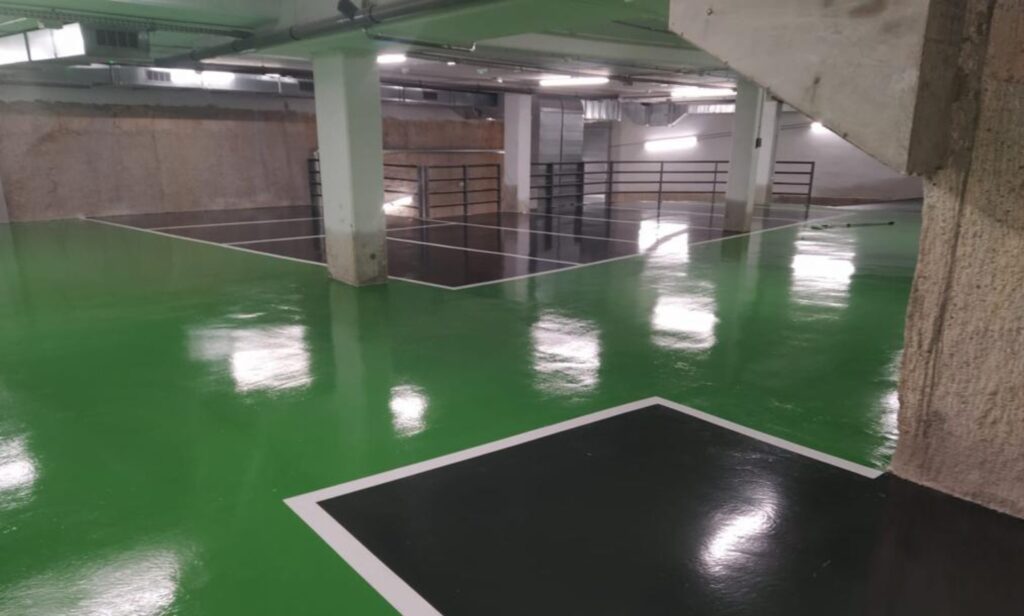
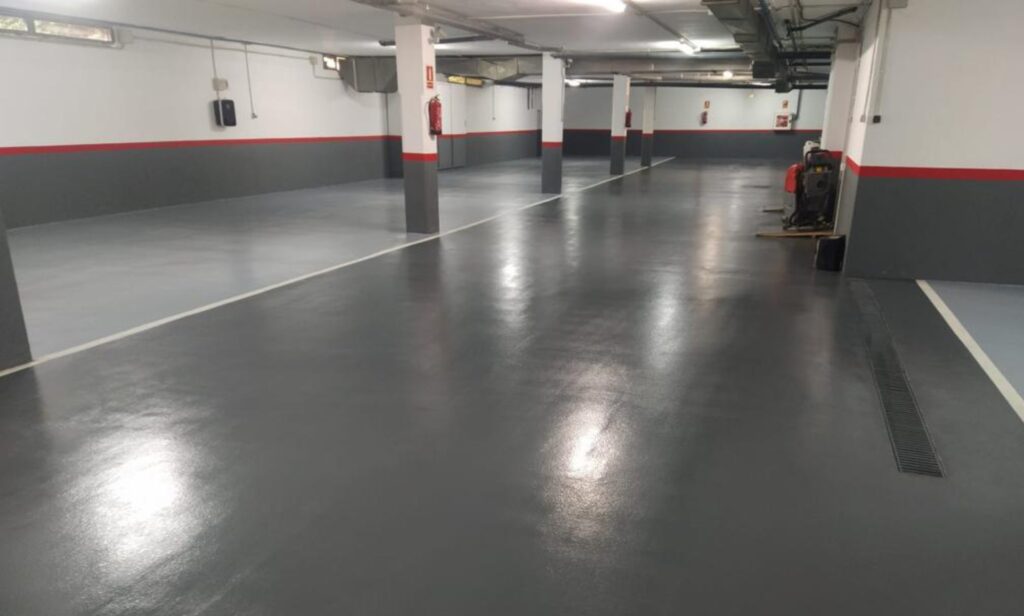
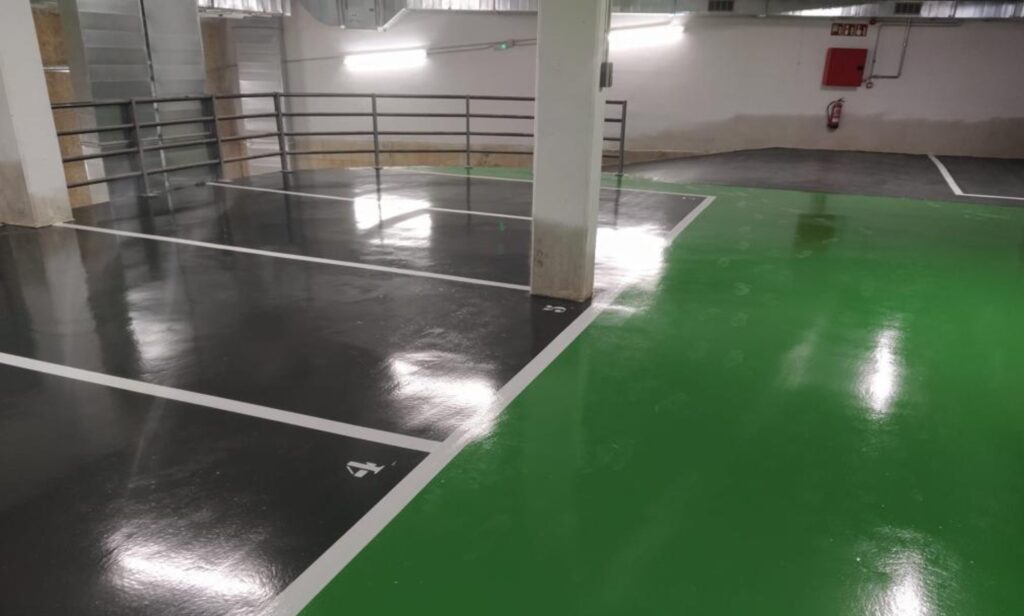
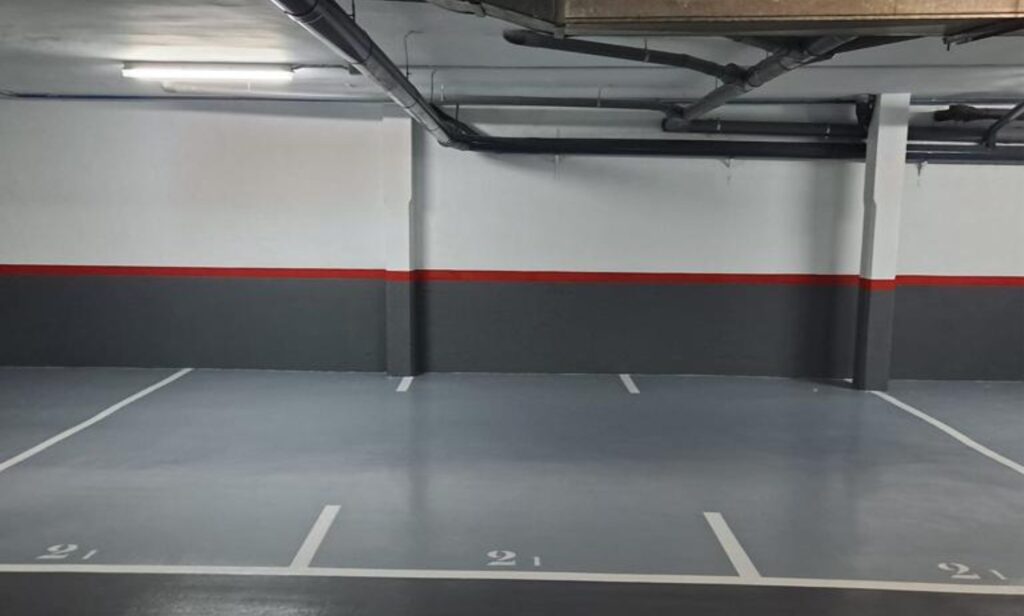
A new floor is the moment to bring order to the car park: we mark out and number the bays, paint the traffic arrows, pedestrian crossings and no-parking areas, and protect pillars and wall bases with coloured bands that make them more visible and hide scuffs.
How we work in a residential car park
We know residents need their parking space. That is why we plan the works by level or by zone, agree the schedule with the property manager (administrador de fincas) and give advance notice of which spaces will need to be cleared each day and for how long.
Visit and diagnosis
We check the condition of the concrete, cracks, stains, ramps and, if there is one, the open top level.
Proposal and schedule
We propose the system for each area, an itemised quote and a phased plan.
Substrate preparation
We scarify or shot-blast the concrete, remove oil and residue and repair cracks, potholes and joints.
Application
We apply the primer and the coats of the system, with an anti-slip finish on ramps and entrances.
Markings and reopening
We mark out the bays and traffic routes, let the floor cure and reopen each area once it can take traffic.
Maintenance
A car park floor lasts much longer with regular cleaning without harsh products, prompt repair of any impact damage and repainting of the markings when they wear. If you need it, we schedule it with the owners’ association.
From Viladecavalls (Barcelona) we work across Spain and on international projects.
Have a similar project?
We visit you, assess the building and give you a detailed, no-obligation quote.
Car park flooring FAQs
How long will my parking space be out of use?
It depends on the system and the temperature, but working zone by zone each space is usually out of use for only a few days: the time it takes to prepare the substrate, apply the coats and let the floor cure until it can take traffic. We give you the schedule before we start.
Can the work be done in phases?
Yes, that is the usual approach in residential buildings. We divide the car park by level or by zone so that part of it is always in use, and we organise access so that residents can come and go.
Epoxy paint or epoxy resin?
Epoxy paint is a thin, more economical coat, suitable for car parks with little traffic and a substrate in good condition. Multi-layer resin is thicker, stands up better to wear and to tyres turning, and lasts longer. We decide once we have seen the car park.
Who pays for the car park floor in a residential building?
If the car park is a common element of the building, the work is paid for like any other common expense, according to the shares set in the owners’ association (comunidad de propietarios) bylaws. If the garage is run as an association of its own, its own rules apply. Your property manager (administrador de fincas) will confirm this in each case.
How much does it cost to renew a car park floor?
It depends on the floor area, the condition of the concrete, the system chosen and the markings required. After the visit we give you a detailed, itemised quote with no obligation.