A damp patch is hardly ever where the problem is. Water rises from the ground, gets in through a crack in the facade or condenses in an unventilated lightwell, and shows up several metres away. That is why at Catalana de Rehabilitació we always start with a diagnosis: we find the source, repair it, and only then restore the finish on walls and ceilings.
We work for owners’ associations (comunidades de propietarios, the body that runs a block of flats), property managers (administradores de fincas), private homeowners and businesses.
Three types of damp, three different treatments
Painting over it or applying an anti-damp product without knowing what kind of damp it is only hides it for a few months. These are the three we see most often (and here is how to tell which one you have):
Rising damp
Water from the ground rises up through the walls. It is typical of ground floors and basements in old buildings with no damp-proof barrier in the foundations. Find out more
- Patches on the lower part of the wall
- Salt deposits and paint lifting off
- Damaged plinths and skirting boards
Water ingress
Rainwater gets in from outside: roofs, terraces, facades, joints or downpipes. It usually gets worse after rain. Find out more
- Patches on ceilings and external walls
- Leaks
- Patches that grow when it rains
Condensation
Water vapour from inside condenses on cold surfaces. It appears in poorly ventilated areas: interior lightwells, bathrooms and bedrooms. Find out more
- Black mould in corners and on ceilings
- Steamed-up windows
- A musty smell
Rising damp
Many buildings in Barcelona and in the old town centres of the Vallès were built without a barrier to stop moisture from the ground, so the wall soaks it up and draws it upwards like a sponge. The treatment is to cut off the water with a chemical barrier at the base of the wall, let the wall dry out and redo the finishes with breathable mortars. We explain it in detail in rising damp.
Damp caused by water ingress
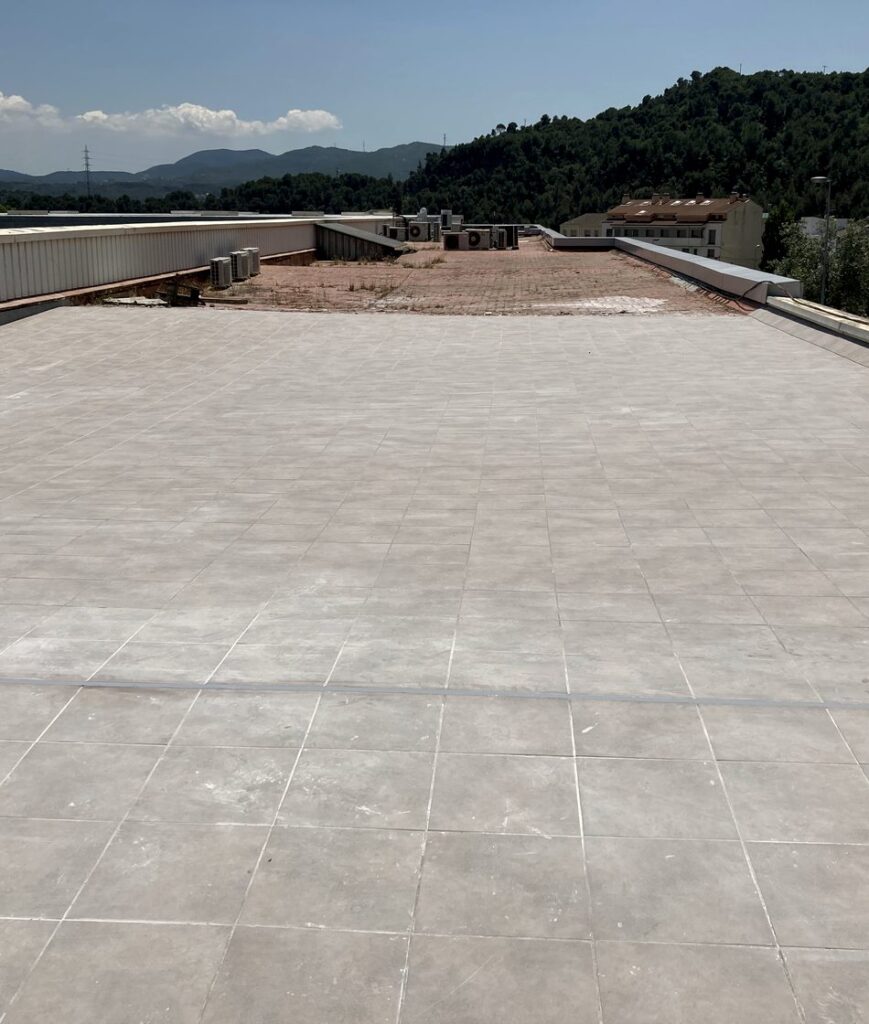
This is the most common type in blocks of flats. Water gets in through ageing waterproofing on the roof or terrace, through cracks in the facade, through worn joints or through poorly detailed junctions with windows and downpipes, and travels through the floor slab until it appears on a ceiling or a wall.
First we find the point of entry, which often does not coincide with the patch, and then we repair it: waterproofing roofs and terraces, sealing cracks, repairing the facade or treating joints. When a continuous, seamless waterproofing layer is needed, we apply hot-spray polyurea.
If what you have is a leak or water coming in, we explain it in detail in leak and water ingress repairs.
Condensation damp
Condensation does not come from outside: it is the vapour generated inside the home, which settles on the coldest walls, where mould then appears. Waterproofing is no use here: you need better ventilation and to get rid of the cold walls. We cover it in condensation on walls.
Have a similar project?
We visit you, assess the building and give you a detailed, no-obligation quote.
How we work
Inspection and diagnosis
We visit the building, check the roof, facade, terraces and services, and find the real source of the damp.
Report and quote
We explain what type of damp it is, what needs doing and how much it costs, with a detailed, no-obligation quote.
Repairing the source
We stop the water getting in: waterproofing, a barrier against rising damp, crack repairs or improved ventilation.
Drying out and finishes
We let the walls dry out and redo the render, paint and finishes with suitable materials so that the damp does not come back.
Damp in owners’ associations
In a block of flats, damp usually affects several neighbours and common elements, and the question of who should pay for the repair soon comes up:
- If the source is in a common element (roof, facade, downpipes, communal terraces or foundations), the repair is the responsibility of the owners’ association.
- If it comes from a flat, for example a leak in a private installation, its owner is responsible.
- The owners’ association’s insurance usually covers damage from leaks or breakages in common elements, but not always damage caused by lack of maintenance.
A technical report identifying the source avoids disputes and speeds up both the repair and any claim. We work regularly with property managers and association presidents, and we handle the whole process, from diagnosis to handover.
Some real cases
Water ingress through the facade in the Eixample
Several flats facing the main facade had damp patches. The inspection found hairline cracks letting in rainwater. We sealed the cracks, applied a waterproofing treatment and checked the critical water entry points.
Rising damp on a ground floor in Gràcia
Rising damp on the interior walls of an old building with no barrier in the foundations. We injected a barrier against rising damp, dried the wall out in a controlled way and finished it with a breathable coating. The damp disappeared and the wall was stabilised.
Condensation in the lightwells of a building in Ciutat Vella
Mould in common areas and in poorly ventilated interior flats. We improved ventilation in the common areas, treated the surfaces with fungicide and proposed insulating the coldest walls. Mould growth fell significantly.
Where we work
From Viladecavalls (Barcelona) we work across Spain and on international projects.
Frequently asked questions about damp
Who fixes damp problems?
A company that specialises in building refurbishment and construction defects. A painter or an anti-damp product is not enough: you need to diagnose where the water is coming from and repair the cause, and that requires knowledge of roofs, facades, waterproofing and wall treatments.
How do I know whether I have rising damp or condensation?
Rising damp appears on the lower part of walls, especially on ground floors and in basements, with salt deposits and paint that lifts off. Condensation appears on ceilings, in corners and behind furniture, usually brings black mould and gets worse in winter and in poorly ventilated rooms. If in doubt, an inspection will clear it up.
Why does damp come back even after the wall has been painted?
Because paint, even anti-damp paint, only acts on the surface. If the water ingress, rising damp or lack of ventilation causing it is not repaired, the patch reappears within a few months.
Is damp a health hazard?
It can be. Mould, especially the kind caused by condensation, aggravates allergies, asthma and respiratory problems. Prolonged water ingress also damages mortar, brick, timber and steel reinforcement, and in old buildings it can even affect the structure.
Who pays for damp repairs in a block of flats run by an owners' association?
It depends on the source. If it is in a common element (roof, facade, downpipes, communal terraces or foundations), the owners’ association (comunidad de propietarios) pays; if it comes from a flat, the owner of that flat pays. A technical report establishing the cause avoids disputes and delays.
Does the owners' association's insurance cover damp?
It depends on the policy. It normally covers damage from leaks or breakages in common elements, but not always damage caused by lack of maintenance. It is worth checking the policy before starting the repair.
How much does it cost to fix damp?
It depends on the type of damp, the area affected and the solution. It can range from a repair costing a few hundred euros to works costing several thousand when a facade or a roof needs attention. That is why we start with a diagnosis and give you a detailed, no-obligation quote.
How long does it take to get rid of damp?
The repair usually takes a few days, but a wall can take weeks or months to dry out completely, depending on its thickness and the type of damp. That is why the final finishes are applied once the wall is dry.