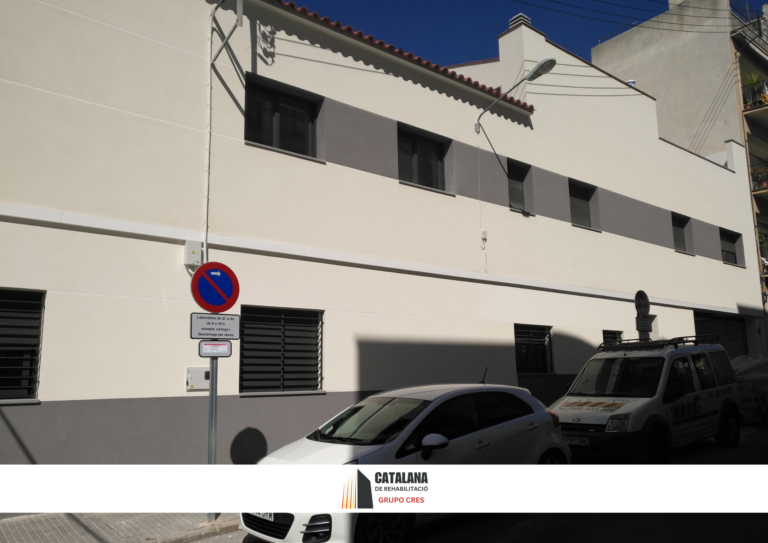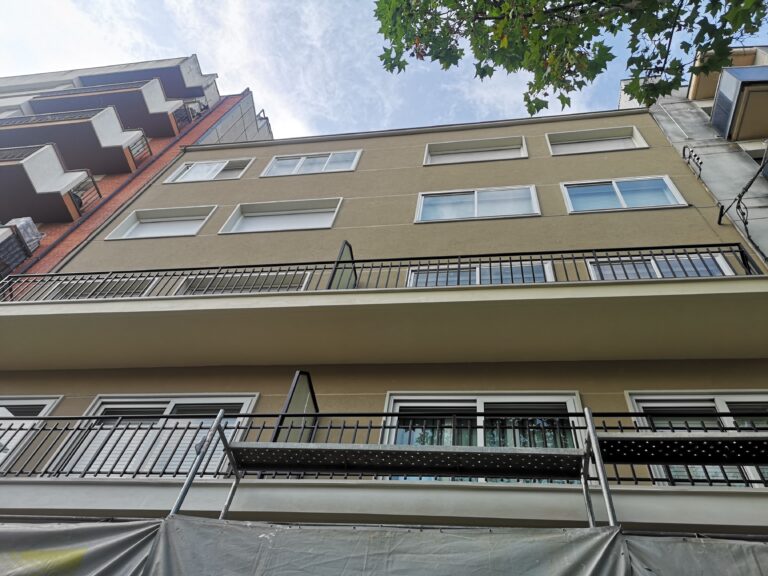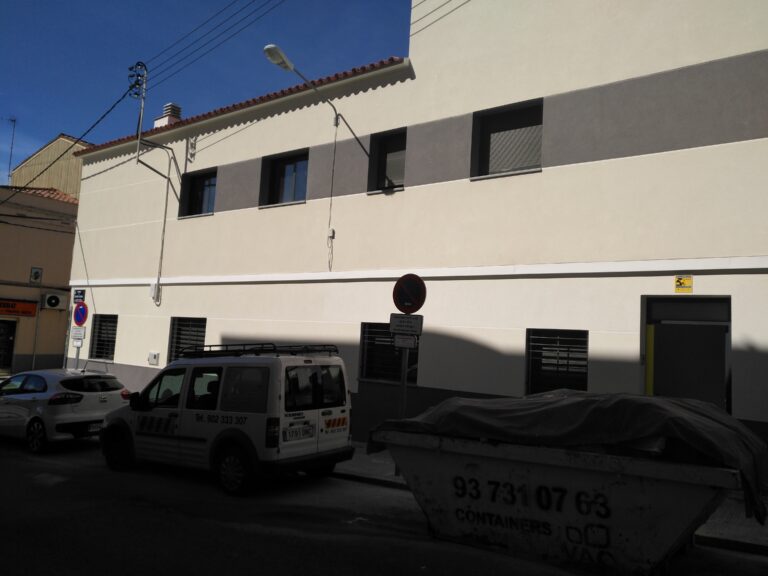
The facade is the first thing you see of a building and the part that takes the most punishment from rain, sun, wind and pollution. Over the years cracks appear, render comes away, damp gets in and balconies deteriorate. Refurbishing it in time makes it safe again, protects what lies behind it and adds value to the homes.
At Catalana de Rehabilitació we refurbish the facades of residential buildings, owners’ associations (comunidades de propietarios), commercial premises and industrial buildings, from one-off repairs to complete refurbishments. From Viladecavalls (Barcelona) we work across Spain and on international projects.
What facade refurbishment includes
Every facade needs something different, but this is the work we do most often:
- Crack repair, dealing with the cause.
- Repairing render and falling sections.
- Waterproofing and treatment of damp and leaks.
- External wall insulation (ETICS).
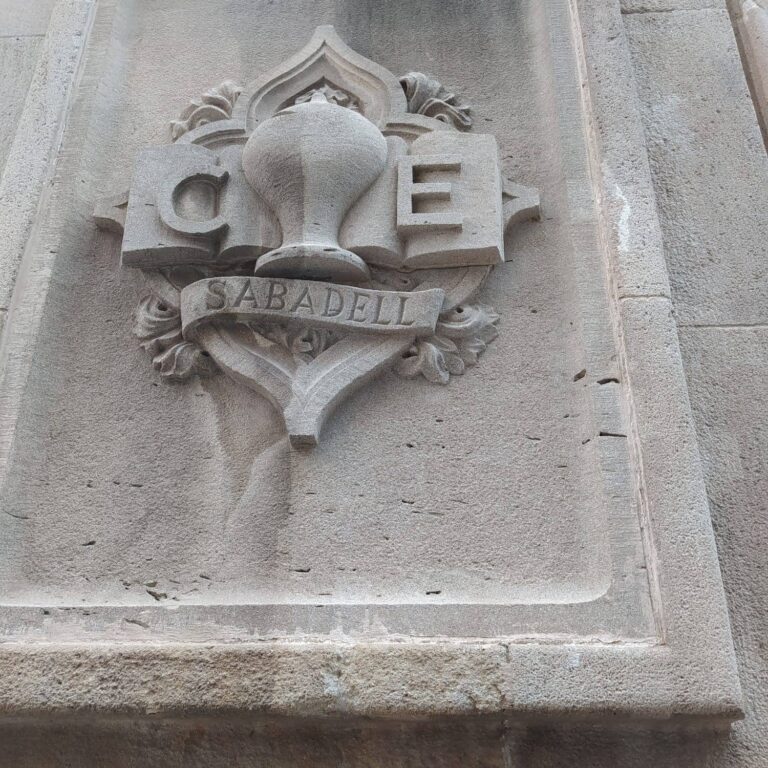
- Restoration of historic facades, in stone and exposed brick.
- Repair of balconies, cornices and overhangs.
- Painting and render finishes.
- Facade cleaning, including laser cleaning.
When a facade needs refurbishing
- Cracks appear and keep growing.
- Pieces of render, cornices or balconies are coming away.
- There are damp patches in the homes behind the facade.
- The paint is cracked or has faded.
- The homes are cold in winter and hot in summer.
- The building inspection (ITE) has found defects.
Acting early costs less: a crack sealed today saves you repairing falling render or a leak tomorrow.
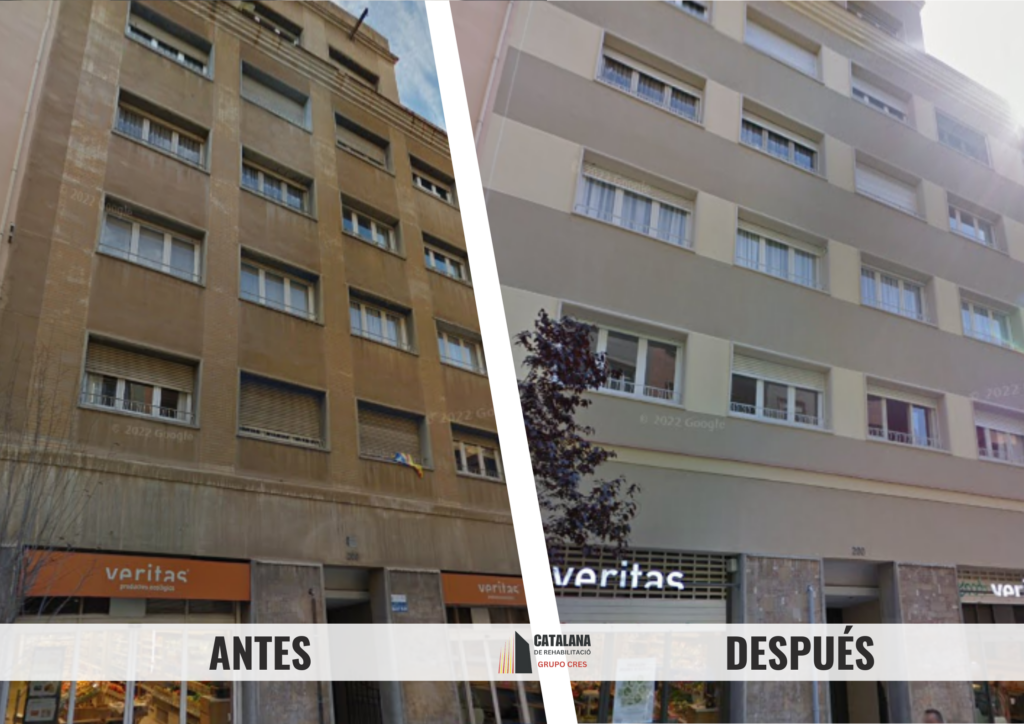
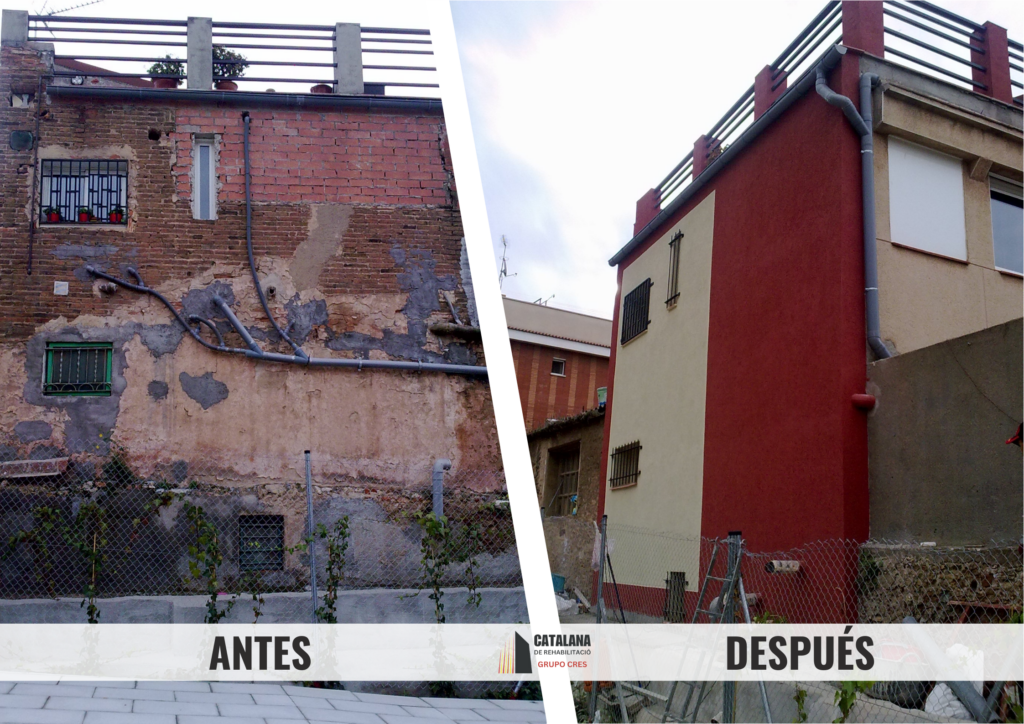
Facade refurbishment for owners’ associations
Most of our facade work is for owners’ associations and property managers (administradores de fincas). We handle the whole process, from the initial inspection to handover, and help you with what the association needs to make a decision: a clear report on the condition of the facade, a quote itemised by work package and a realistic timescale. If you would like a rough idea first, see how much facade refurbishment costs.
Residents stay in their homes while the work goes on. We plan it so that entrances remain accessible, doorways and ground-floor shops are protected, and noise and dust are kept down.
How we work
Facade inspection
We check render, cracks, balconies, cornices and points where water gets in, and assess whether there is any immediate risk.
Proposal and quote
We explain what needs doing, with which materials and in what order, with a detailed, no-obligation quote.
Permits and set-up
We obtain what is needed to start and put up the access equipment and protection.
The work
We repair, waterproof or insulate as required and apply the final finish.
Inspection and handover
We go over the facade with the owners’ association before taking down the access equipment and leave you maintenance recommendations.
Facade maintenance
Regular inspections, with small repairs, crack sealing and protective treatments, greatly extend the life of a facade and avoid emergency work. For owners’ associations we organise this maintenance on a scheduled basis.
Have a similar project?
We visit you, assess the building and give you a detailed, no-obligation quote.
Frequently asked questions about facades
Who pays for facade repairs on a building?
The facade is a common element, so it is paid for by the owners’ association (comunidad de propietarios), normally in proportion to each flat’s share of ownership (cuota de participación). The exception is damage caused by one owner, for example through badly done building work or an installation in their flat: in that case it is their responsibility.
How long does facade refurbishment take?
It depends on the size of the building and the work involved. A repair and repaint can be done in a few weeks; a full refurbishment with external wall insulation (ETICS) takes longer. We give you a specific timescale with the quote.
Can residents stay in the building while the facade is refurbished?
Yes. The work is done from the outside and residents stay in their homes. We organise the job so that entrances remain accessible and disruption is kept to a minimum.
Do you need a permit to refurbish a facade?
Yes, the relevant permit has to be obtained from the local council and, if scaffolding is put up on the street, a permit to occupy the public highway. Listed buildings are also subject to specific rules. We tell you what is needed in each case.
How often should a facade be painted or inspected?
It depends on the material and how exposed it is. It is worth inspecting it every few years and acting when the paint fades, cracks or the facade starts to absorb water. Waiting too long turns a repaint into a repair.
Are there grants or tax relief for facade refurbishment?
When the work improves the building’s energy efficiency, as external wall insulation (ETICS) does, there may be public grants and deductions on Spanish income tax (IRPF), depending on the funding programme open at the time. They usually require one energy performance certificate before the work and another one afterwards.