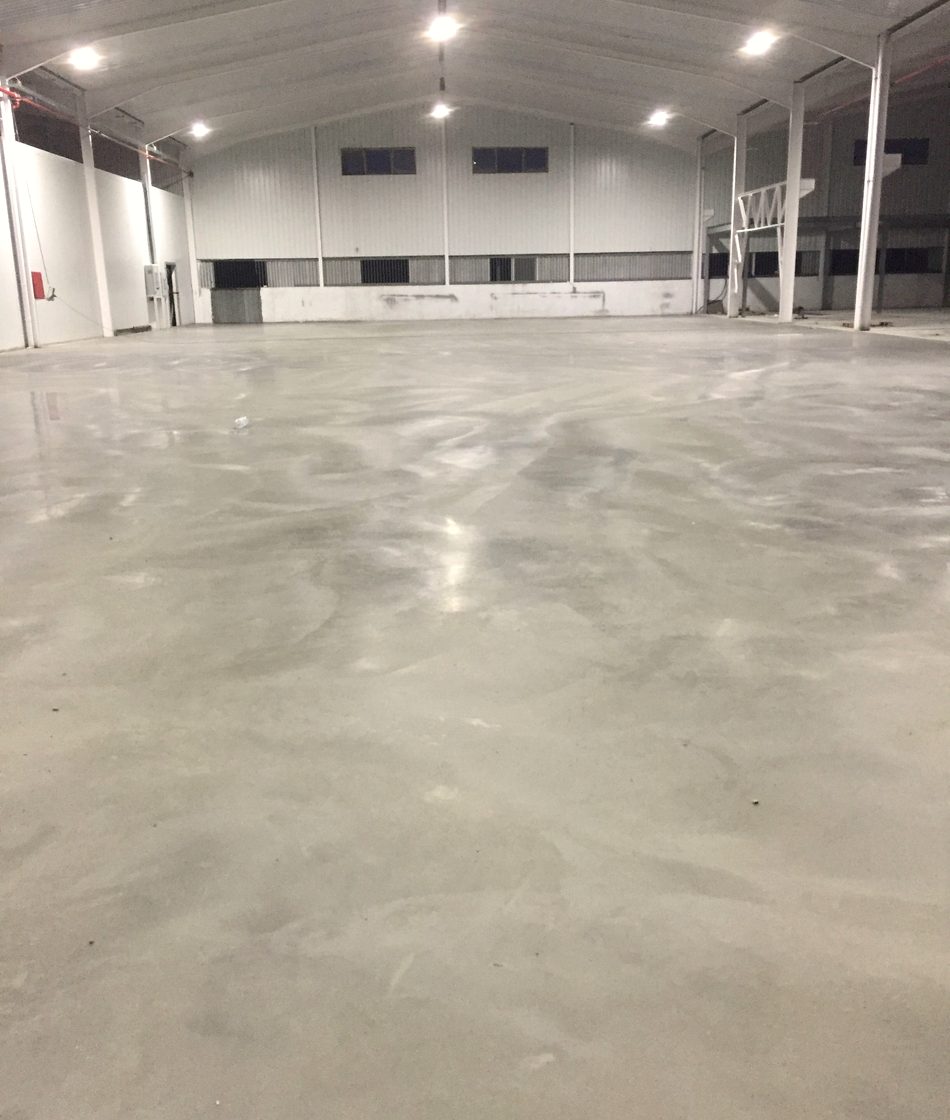
Polished concrete is the most widely used solution in industrial buildings and large floor areas. It bears heavy loads and constant forklift and lorry traffic, has a very long service life, needs little maintenance and is one of the most economical options per square metre.
How we do it
Sub-base
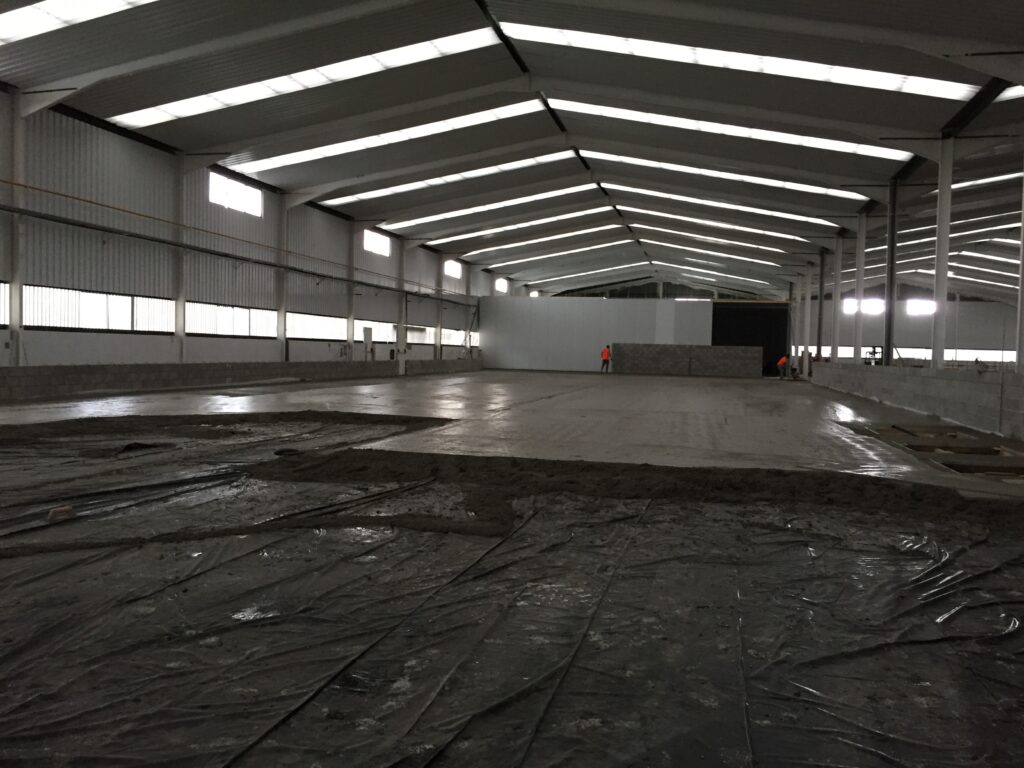
We prepare and compact the ground sub-base.
Reinforcement
We lay the steel mesh or reinforcement according to the expected loads.
Pouring
We pour and level the concrete.
Power floating and polishing
We power-float the surface and apply surface hardeners for a wear-resistant finish.
Joints
We cut the movement joints at exactly the right time to prevent cracking.
Where it is used
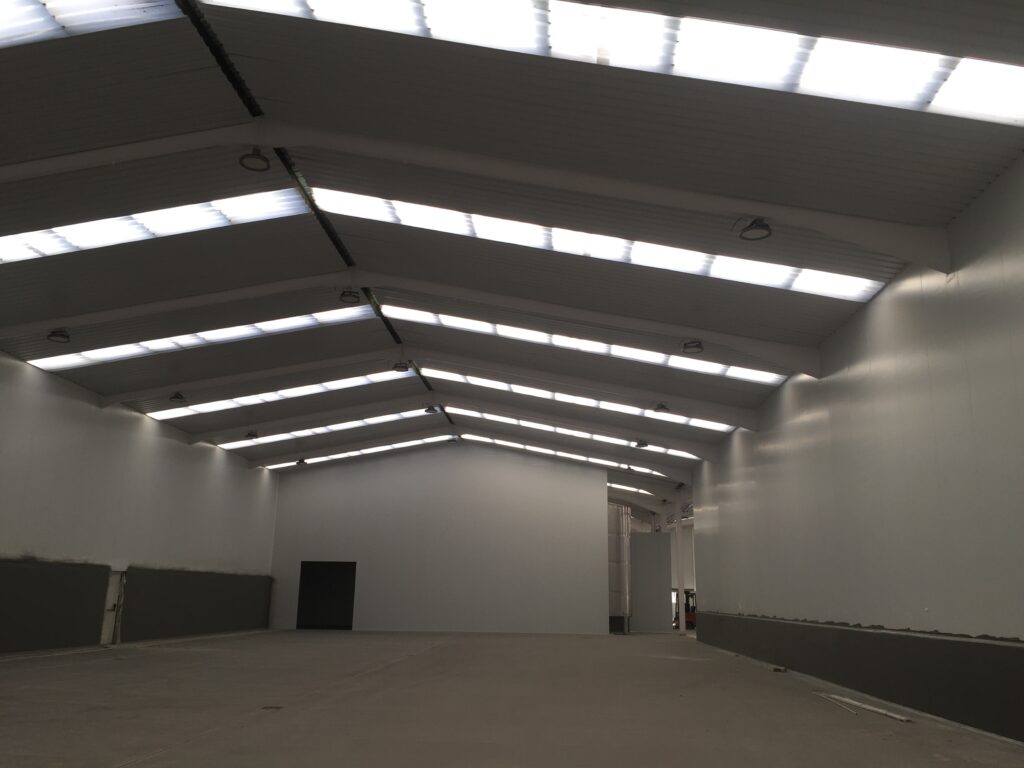
- Industrial and production buildings.
- Warehouses and logistics centres with racking and forklifts.
- Garages and car parks.
- Large retail spaces.
Where chemical resistance or a more hygienic surface is also needed, it can be finished with an epoxy resin system. From Viladecavalls (Barcelona) we work across Spain and on international projects.
Have a similar project?
We visit you, assess the building and give you a detailed, no-obligation quote.
Polished concrete FAQs
What is the difference between polished and power-floated concrete?
Power floating smooths and compacts the surface of fresh concrete with machines; polishing goes a step further, with surface hardeners and a smoother, glossier finish. In industrial buildings the two are usually combined: mechanical power floating with a hardener.
Why are joints cut into concrete?
Because concrete shrinks as it hardens and with changes in temperature. Joints cut at the right time make those stresses come out along a planned straight line rather than as cracks across the whole surface.
Does polished concrete need a lot of maintenance?
No, it is one of the lowest-maintenance floors: regular cleaning and, over time, a fresh surface treatment in the areas with the most wear.