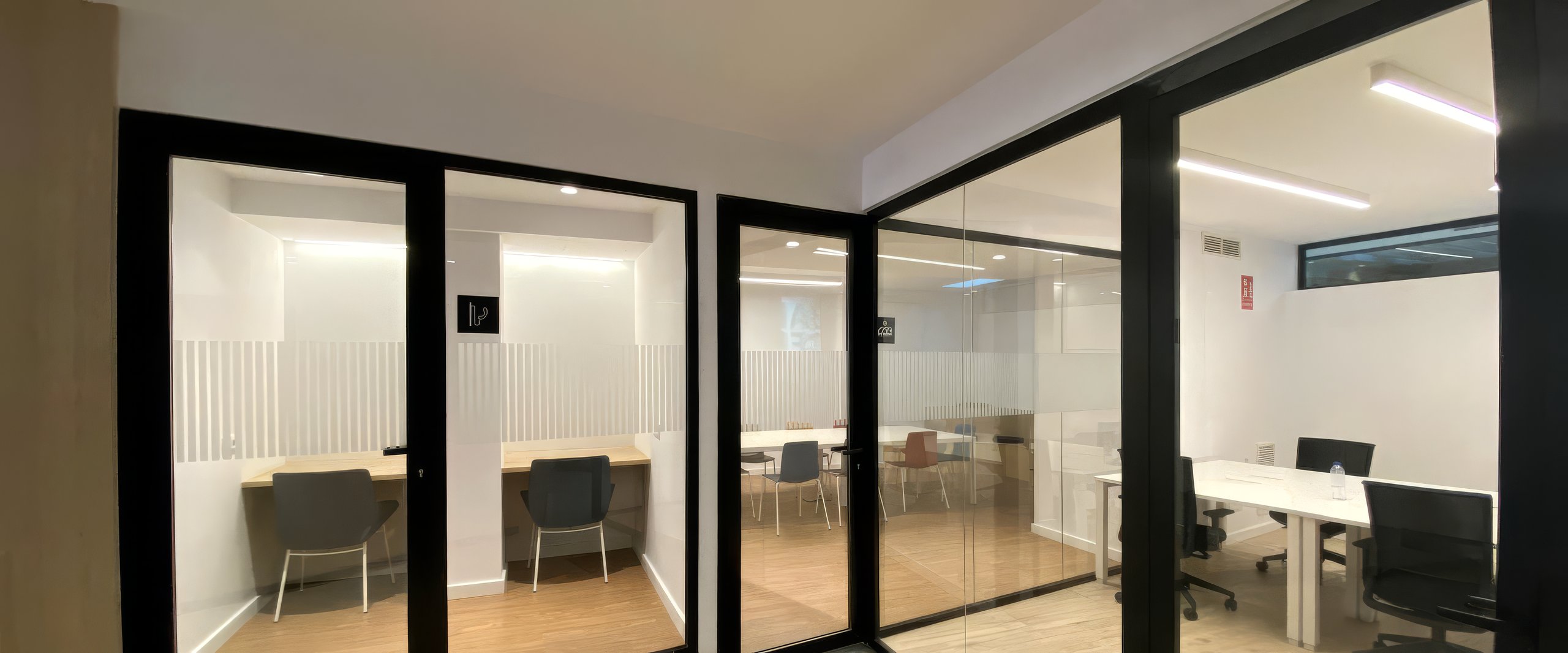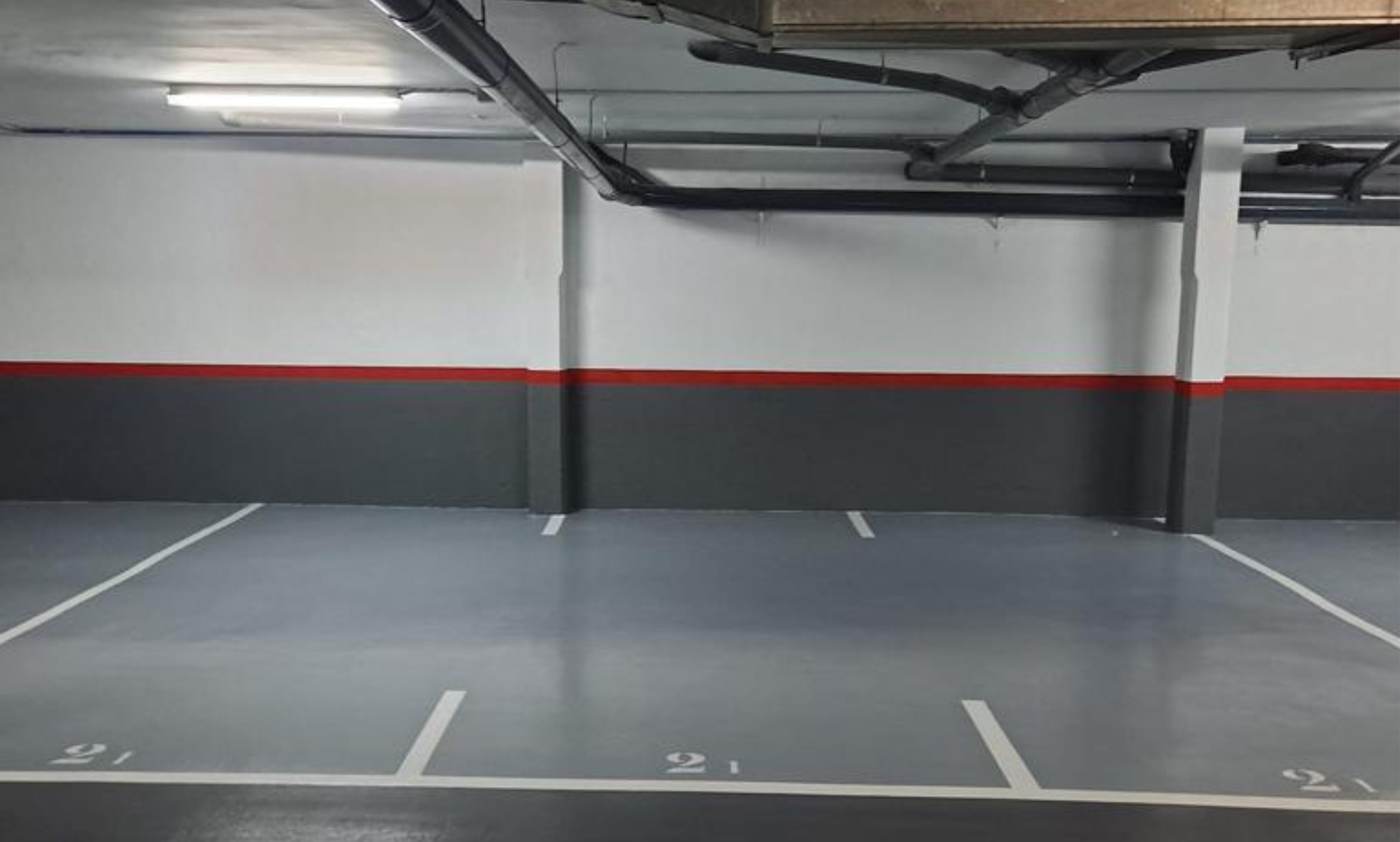
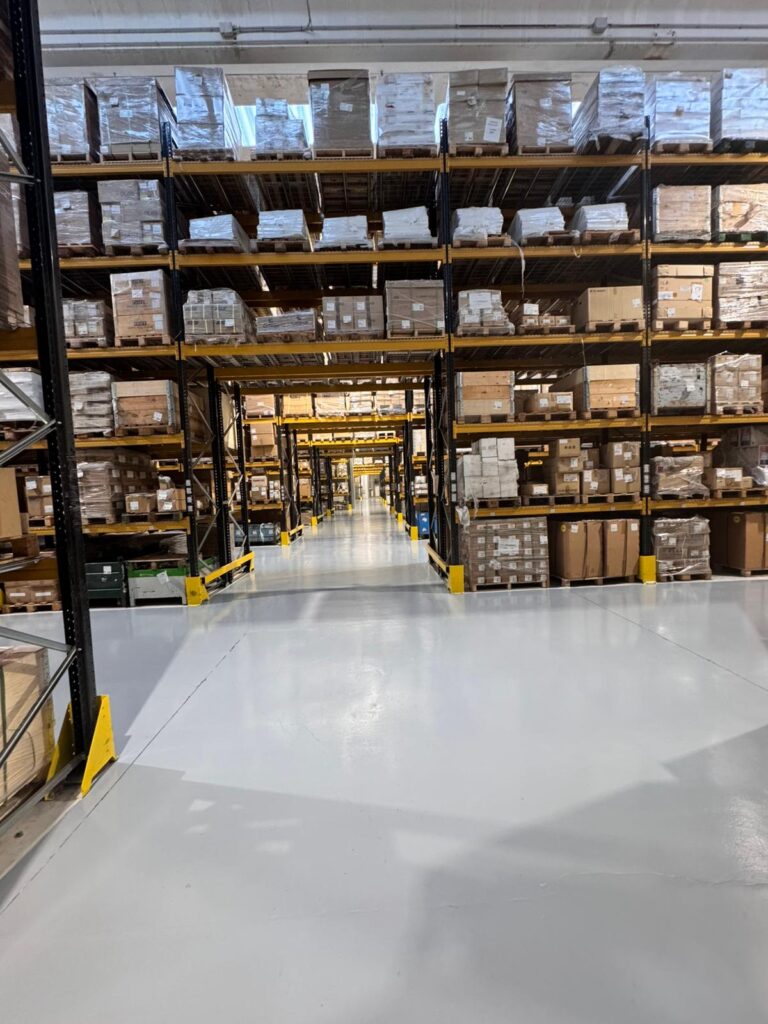
Epoxy resin flooring forms a seamless, joint-free surface with high mechanical and chemical resistance. It does not trap dirt, it is easy to clean and it stands up to machinery traffic, oil and many chemicals.
We install it in industrial buildings, logistics warehouses, workshops, car parks, garages, laboratories and commercial premises.
Types of epoxy flooring
Self-levelling
A smooth, glossy, seamless surface a few millimetres thick. Very hygienic and easy to clean; ideal for warehouses, laboratories and clean areas.
Multi-layer
Layers of resin and aggregate that give a rough, anti-slip finish, for ramps, loading areas and areas that may get wet.
Epoxy paint
A thinner coat to protect and mark out floors with light traffic, such as garages and car parks.
How we apply it
Substrate preparation
We grind or scarify the concrete to open up the surface and ensure good adhesion, and check its moisture content.
Repairs
We repair cracks and joints and leave the surface level.
Primer
We apply an epoxy primer that improves the bond of the system.
Resin coats
We apply the chosen system, self-levelling or multi-layer, depending on the use.
Sealing
We finish with a seal coat that adds resistance and protection and gives the final finish.
Advantages and limitations
- Advantages: joint-free, hygienic, resistant to chemicals and wear, easy to clean and available in many colours, with built-in markings.
- Limitations: it is less flexible than polyurethane and tends to yellow in direct sunlight; for outdoor areas or places subject to thermal shock we choose a different system.
From Viladecavalls (Barcelona) we work across Spain and on international projects.
Have a similar project?
We visit you, assess the building and give you a detailed, no-obligation quote.
Epoxy resin FAQs
Where is epoxy resin flooring used?
In industrial buildings, warehouses, workshops, car parks, garages, laboratories, healthcare areas and commercial premises: wherever you need a seamless, hard-wearing surface that is easy to clean and resists chemicals.
Is epoxy resin suitable for outdoor use?
It is not the best choice: in direct sunlight it tends to yellow. Outdoors or in areas with a lot of sunlight, other systems such as polyurethane are used, or a UV-resistant finish.
What is the difference between self-levelling and multi-layer epoxy?
Self-levelling epoxy forms a smooth, seamless surface a few millimetres thick that is very hygienic and easy to clean. Multi-layer epoxy combines layers of resin and aggregate, has a rougher texture and is used when an anti-slip finish is needed.