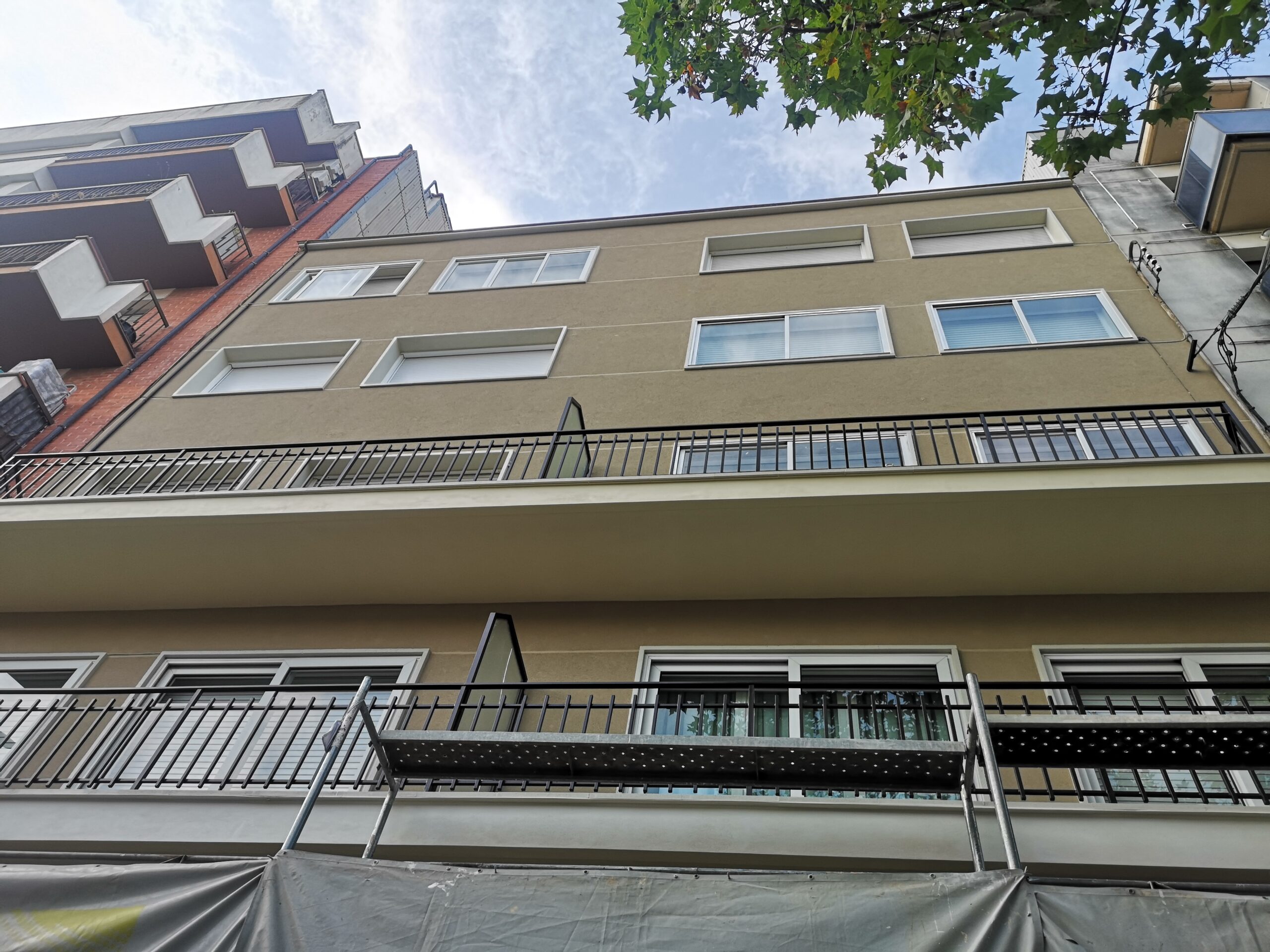
Rain driving against a facade will find any crack, open joint or porous render to get in. The result is damp patches on the interior walls, peeling paint, mould and, over time, deterioration of the materials.
We waterproof the facades of residential blocks, homes and other buildings, choosing the system according to the facade material and its condition.
Signs that water is getting in through the facade
- Damp patches on the walls facing outside.
- Paint peeling or blistering on the inside.
- Mould and a musty smell.
- Leaks that appear or get worse on rainy days.
- White efflorescence (salt deposits) on the outside face.
Solutions
Sealing cracks and joints
We seal cracks, joints and junctions with windows, balconies and downpipes, which is where most of the water gets in.
Water-repellent treatments
Colourless, breathable treatments that repel water without changing the appearance. Ideal for exposed brick and stone.
Waterproof coatings
Continuous single or multi-layer coatings for rendered or badly deteriorated facades, which also renew the finish.
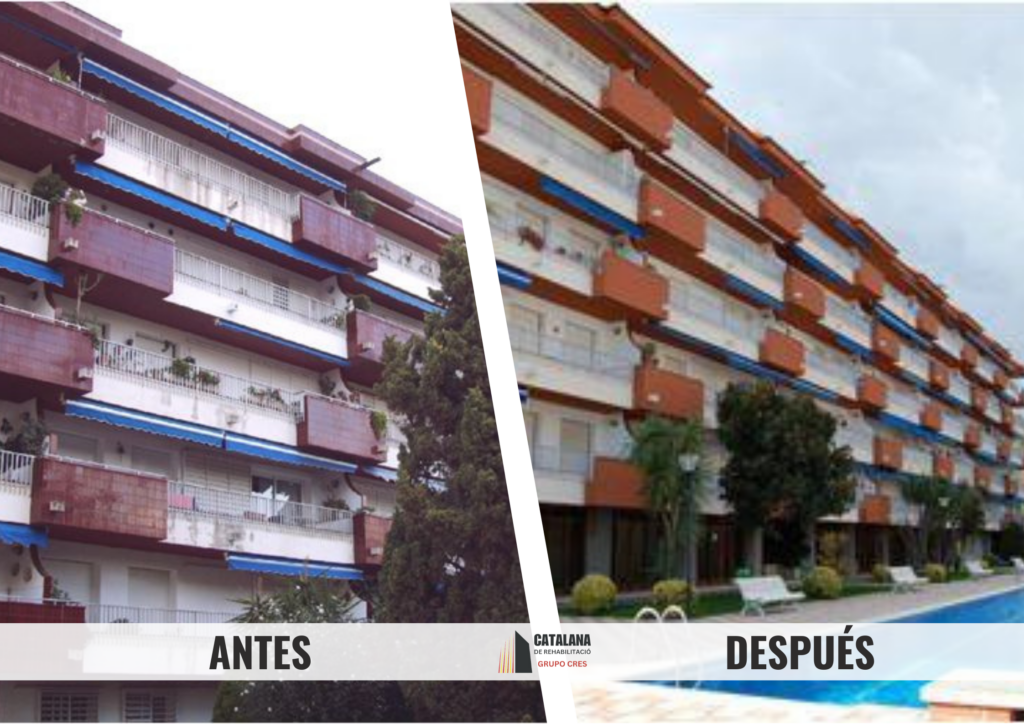
When the facade is badly damaged, waterproofing becomes part of a complete refurbishment, and if you also want to improve the insulation, part of an external wall insulation (ETICS) system.

How we work
Inspection
We examine the facade and identify where the water is getting in.
Preliminary repairs
We repair the render, seal cracks and joints and fix the damaged areas.
Waterproofing
We apply the chosen system over the whole surface or on the critical areas.
Final check
We check the vulnerable points: junctions with window frames, balconies, cornices and downpipes.
If your damp is not coming from the facade, it may be rising damp or condensation: we explain both in damp repair. From Viladecavalls (Barcelona) we work across Spain and on international projects.
Have a similar project?
We visit you, assess the building and give you a detailed, no-obligation quote.
Frequently asked questions
How do I know if water is getting in through the facade?
Damp patches on the walls facing the street, paint peeling on the inside, a musty smell, mould or leaks that appear on rainy days. If the patches get worse after it rains, the water is almost certainly coming in through the facade.
Does a water-repellent treatment change how the facade looks?
No. It is colourless and breathable: it repels rainwater but lets the wall breathe, without changing its colour or texture. That is why it is the usual solution for exposed brick and stone facades.