This article explains the rules in Catalonia, where the building inspection (ITE) is regulated by Decree 67/2015. Other Spanish regions have their own inspection schemes.
The technical building inspection (inspección técnica del edificio, ITE) is a compulsory check on the state of repair of residential buildings. In Catalonia it is governed by Decree 67/2015, and its outcome is a technical report (the IITE), on the basis of which the Generalitat (the Catalan government) issues the building’s certificate of fitness (certificado de aptitud).
Which buildings need it and when
All residential buildings — blocks of flats and single-family houses — must pass the inspection before they turn 45, counted from the date recorded in the Cadastre (Catastro, the Spanish property register). There are two exceptions: buildings with a dilapidation (ruina) procedure under way, and single-family houses with a valid habitability certificate (cédula de habitabilidad), which do not have to submit it until that certificate expires.
The inspection is carried out by a qualified professional: an architect, a building surveyor (arquitecto técnico or aparejador) or a building engineer.
What each result means
The inspector classifies the defects found and, according to the most serious one, the building receives a type of certificate:
| Defects | Certificate | Validity |
|---|---|---|
| None or minor | Fit (no defects or minor defects) | 10 years |
| Significant | Provisionally fit | 6 years, with checks every 2 years |
| Serious or very serious, with safety measures already taken | Fit on a precautionary basis | 3 years, with checks at least once a year |
| Serious or very serious, with no measures | Refused | — |
Before the certificate expires, the building must be inspected again and a new report submitted. In other words, the better the condition of the building, the longer it is until the next inspection.
Source: Decree 67/2015 and the Generalitat’s FAQs on the ITE (in Catalan). This article is for information only and summarises the Catalan rules in force when it was written. For a specific case, ask your property manager (administrador de fincas) or a lawyer.
What to do if the report finds defects
Urgent matters first
If there is a risk of material falling, act now: remove anything loose, put up nets or mesh and, if necessary, prop the structure. These are the measures that allow a refused certificate to become a precautionary one.
Understand the report
The report says what is wrong, where and how serious it is. It is worth reading it with whoever will carry out the work, to turn it into specific tasks and set priorities.
Quote and general meeting
With an itemised quote, the owners’ association (comunidad de propietarios) approves the works at a general meeting. Upkeep and repair works are an obligation of the association. We explain this in how works are approved.
Works and a new certificate
The repairs are carried out and the inspector certifies that the defects have been corrected, so that a better certificate can be obtained.
The most common defects
In the buildings we repair, inspections most often point to:
- Balconies and slab edges with cracked concrete and rusted reinforcement.
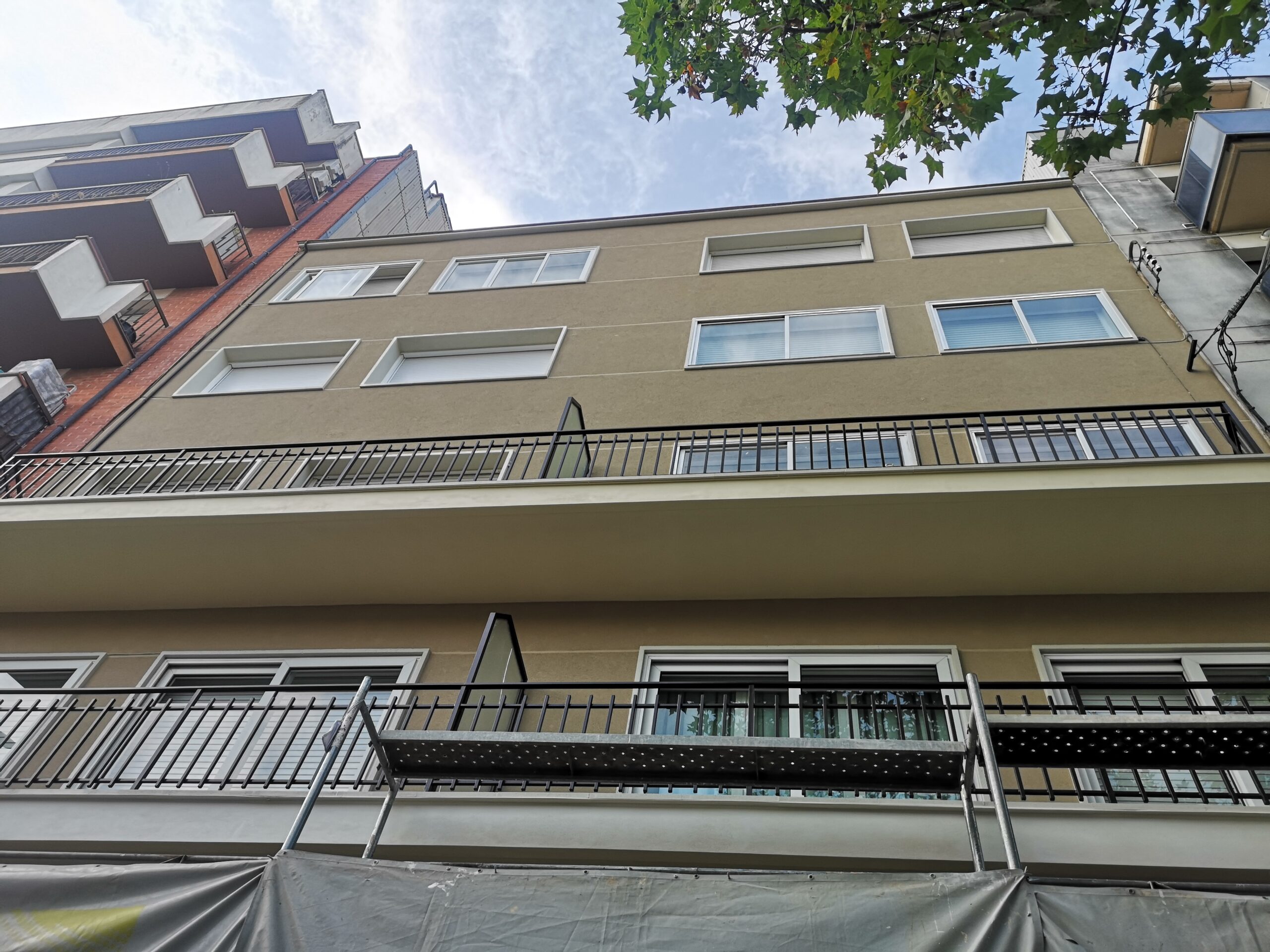
- Loose render, cracks and a risk of pieces falling from the facade.
- Roofs and roof terraces with ageing waterproofing and leaks.
- Damp in basements, ground floors and courtyards.
- Deteriorated downpipes and drains.
At Catalana de Rehabilitació we help you interpret the report, prepare an itemised quote and carry out the repairs in the order that safety dictates.
Have a similar project?
We visit you, assess the building and give you a detailed, no-obligation quote.