Natural stone (limestone, sandstone, granite, marble, or the Montjuïc and Sant Vicenç stone of so many Catalan buildings) is one of the noblest building materials, but also one of those that suffers most from aggressive cleaning.
Pollution, green algae and the passage of time darken it and form crusts. We clean it with lasers, which remove that dirt layer by layer and stop when they reach sound stone.
What we treat
- Black crusts and soot from pollution on facades, cornices and reliefs.
- Green algae, moss and micro-organisms in damp or shaded areas.
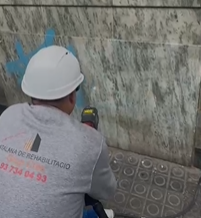
- Graffiti and old paint on stone.
- Traditional finishes such as bush-hammering, removing the dirt from their recesses without wearing down the edges.
Why not sand or acids
Sandblasting wears the surface, rounds off the edges, erases the carving and opens up the pores: the stone becomes more vulnerable and gets dirty again sooner. Acids can stain the stone permanently. The laser works dry and without contact, so it preserves the original texture, the mason’s marks and the natural patina that protects the stone.
For facades, monuments and homeowners
We clean stone facades for owners’ associations, entrances, staircases, fireplaces and decorative features in homes, as well as historic pieces and buildings. If the facade also needs repairs, we include them in a facade restoration.
From Viladecavalls (Barcelona) we work across Spain and on international projects.
Have a similar project?
We visit you, assess the building and give you a detailed, no-obligation quote.
Natural stone FAQs
What is the black crust on stone facades?
A dark layer formed when pollution reacts with the stone, especially limestone and marble. As well as spoiling its appearance, it speeds up deterioration, because it holds pollutants on the surface.
Why not sandblast the stone?
Because it wears the surface, rounds off the edges, erases the carving and opens up the pores of the stone, which from then on gets dirty and deteriorates more quickly.